
The Power of Waste Audits in Multi-Use Buildings
The Power of Waste Audits: Driving Real Change in Multi-Use Buildings
Managing waste in a multi-use building with both public and staff-only areas can be a challenge as waste behaviors and infrastructure needs can vary significantly across these environments. Waste audits are a powerful tool to understand these differences, develop targeted waste management strategies, and measure improvements in waste diversion and operational performance over time. When implemented thoughtfully, waste audits do far more than measure what ends up in the trash—they reveal patterns, uncover misconceptions, and provide clear direction for meaningful, data-driven improvements.
Let’s dive into how our team designed and executed targeted waste audits of staff-only spaces and public-facing areas inside an aquarium, and how they implemented a waste practice transformation. We’ll cover how these changes led to improved waste infrastructure, higher diversion rates, reduced contamination, long-term cultural change among staff, and increased awareness at the point of waste generation by visitors.
Understanding Staff Behavior and Establishing a Baseline
Back-of-house spaces typically generate a significant portion of a building’s operational waste, making them an essential focus for waste reduction and diversion efforts. To better understand these staff spaces, targeted waste audits of staff-only areas were conducted to establish a baseline for waste diversion rates, analyze waste stream composition, and evaluate how well employees understood current recycling and disposal guidelines. These audits revealed actual waste performance across departments, highlighted gaps in staff knowledge, and informed infrastructure and process changes needed to improve waste diversion.
With this data in hand, the team launched several improvements designed to make proper waste disposal easier and more intuitive for staff. They standardized waste bin infrastructure, introduced updated signage with images of common items for each waste stream (landfill, recycling, compost), and added recycling and compost containers in locations where they did not previously exist. Office waste was centralized into shared collection areas, eliminating individual desk bins, improving collection efficiency for custodial staff, and reducing the number of plastic liners used throughout the building. These changes were applied consistently across departments to establish a new operational standard for waste management.
Tracking Progress With Post-Deployment Waste Audits
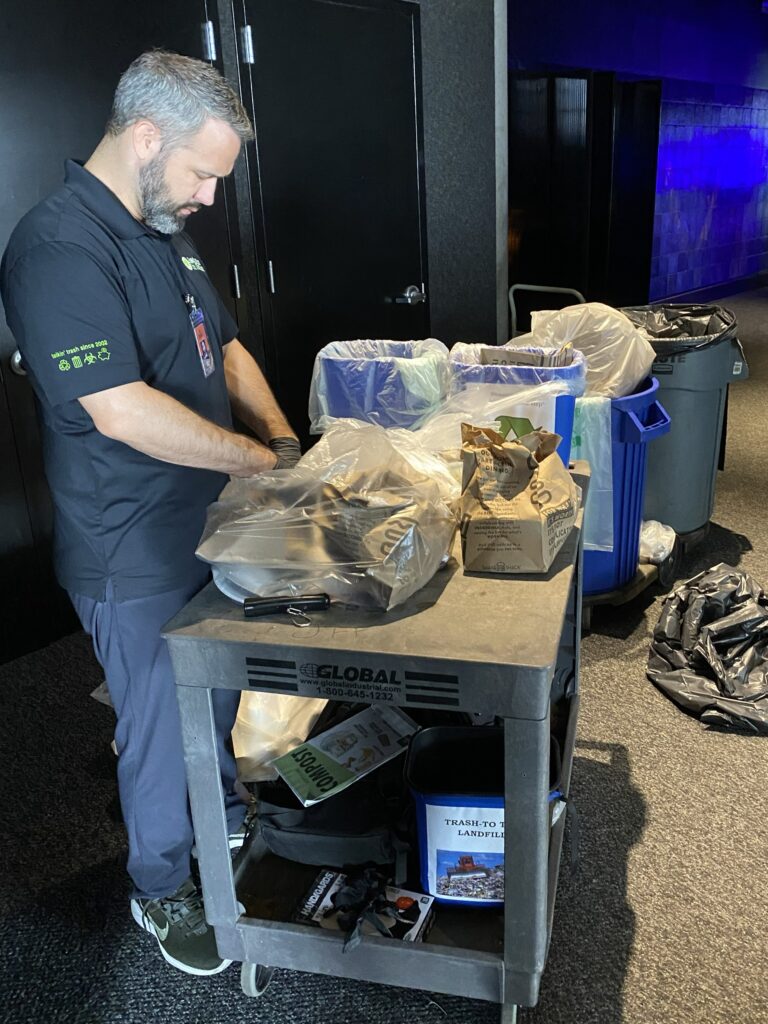
After the improvements were implemented, the team conducted post-deployment waste audits to measure progress, track waste diversion rates, and identify areas where further operational support was needed. Similar to the pre-deployment audits, each department’s waste was kept separate so that sorting accuracy and contamination rates could be evaluated at a more granular level. This approach made it possible to identify where compliance had improved, where contamination issues persisted, and which departments required additional training or infrastructure adjustments.
Conducting multiple waste audits throughout the year allowed the team to track changes in diversion performance and identify operational factors impacting waste outcomes that may not have been initially considered. For example, when comparing audit results from high-traffic versus low-traffic seasons, the busy season brought increased visitor volumes in public areas, but also higher staffing levels, including temporary staff. Increased contamination rates correlated with this shift, highlighting the need to incorporate waste sorting education into onboarding processes for all temporary staff.
These ongoing audits—often referred to as maintenance waste audits—provided opportunities for real-time course correction rather than relying on one or two annual audits that miss the natural fluctuations in waste generation, staffing, and building use. Waste generation is not static, and audit frequency should reflect operational reality.
The continual audit cycle also revealed opportunities to further optimize waste infrastructure and validate previous improvements. For example, departments that consistently generated compostable material in landfill streams were equipped with compost bins to capture that material properly and reduce contamination. Smaller adjustments—such as repositioning bins or reinforcing training in high-contamination areas—were also tracked and validated through ongoing audits. Through this iterative process, waste audits became the foundation of a long-term waste optimization strategy.
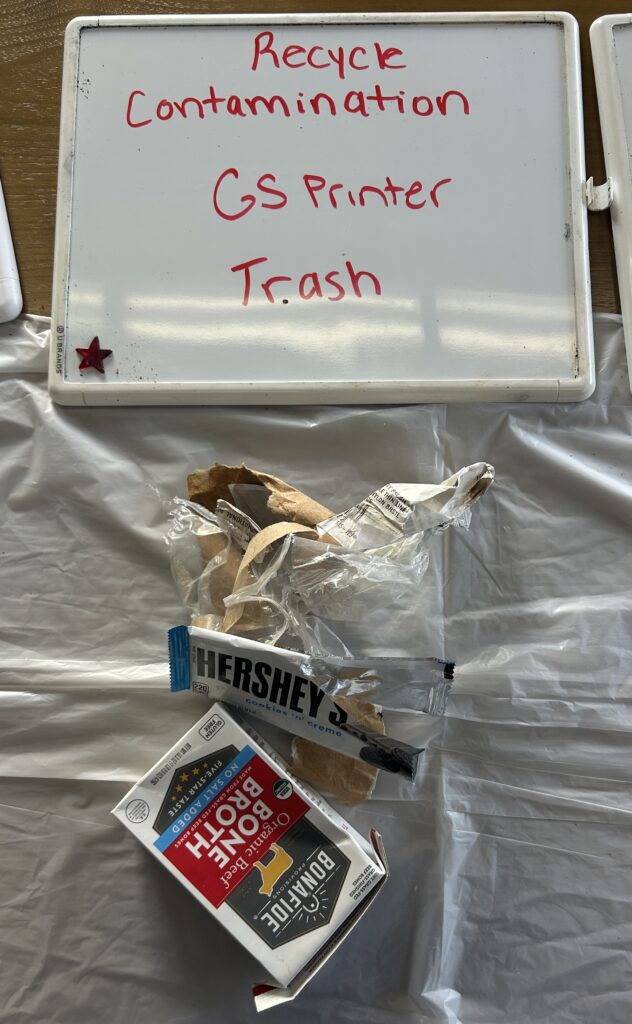
Photographs taken during the audits played an important role as well. These images documented common contamination issues—such as compostable materials in landfill bins or recyclables bagged in plastic—and became effective tools for targeted staff education. They also helped identify commonly mis-sorted items and opportunities for procurement changes that could reduce waste complexity. Showing employees real examples from their own work environment reinforced expectations and improved sorting behavior.
Assessing Public-Facing Areas for Waste Infrastructure Improvements
Waste audits in public-facing areas require a different approach because visitors make quick disposal decisions without familiarity with the building’s waste system. In these environments, audits focused on how effectively the waste infrastructure supported proper sorting rather than attempting to directly influence individual behavior.
The team evaluated fill levels of each waste stream after a full day of use, providing insight into which bins were actively used and which were underutilized. This helped identify opportunities to remove, relocate, or consolidate bins to better align with actual user behavior and improve collection efficiency for custodial teams. Mapping container locations alongside audit data also revealed how waste composition varied by location within the building.
Understanding the composition of waste in public bins made it possible to identify common contamination issues and determine which materials should be targeted for improved recycling capture. These insights informed infrastructure improvements that were tested through additional waste audits, including updated signage and restrictive recycling lids designed to reduce contamination. Container placement strategies were tested across different conditions, including lighting, traffic flow, and functional use of each space.
Follow-up audits confirmed the effectiveness of these changes, demonstrating measurable improvements in waste diversion and reduced contamination. This provided the data needed to support broader, facility-wide infrastructure updates.
Waste Audits as a Catalyst for Measurable, Long-Term Change
Waste audits offer far more than a snapshot of waste generation. When used consistently, they provide a structured, data-driven roadmap for improving waste diversion, reducing contamination, optimizing infrastructure, and strengthening staff engagement.
In this case, waste audits supported evidence-based decision-making, tracked changes in staff behavior and compliance over time, identified operational gaps, informed targeted education efforts, and enabled infrastructure adjustments in both staff-only and public-facing areas.
Waste systems improve when they are measured, tested, and adjusted.
Ultimately, waste audits helped create a culture of continuous improvement grounded in operational data—demonstrating that meaningful change begins with understanding what is actually in the waste stream.
Ready to See What’s Really in Your Waste Streams?
Whether you are beginning to evaluate your waste streams or looking to optimize an existing waste management program, we can help identify the right type of waste audit and build a practical, phased plan aligned with your operations. From baseline waste audits to ongoing maintenance audits and infrastructure optimization, our team translates waste data into clear, actionable steps that improve performance, reduce cost, and increase diversion.
Let’s build a waste program that works for your facility, your staff, and your operational goals.

Our team of sustainability and waste consultants work together to develop content for our site. Contact us to learn more about something we’ve written about or would like us to focus on in the future.
Newsletter
Keep up to date with the latest from the Reduction In Motion team.