
The Power of Nurses in Healthcare Sustainability
Why Nurses Are Key to Healthcare Waste Reduction
In healthcare, waste is often treated as an operational issue – just something that shows up at the loading dock and gets managed through hauling, disposal, and compliance. While that’s an important part of the system, it only tells part of the story.
Waste doesn’t begin when it’s collected by housekeeping or hauled away. It starts much earlier, at the point of care.
In a hospital setting, no one is closer to that moment than nurses. They are constantly making real-time decisions in fast-paced environments, balancing patient needs with efficiency and preparedness. What gets opened, what gets used, and what gets set aside “just in case” are all part of the flow of a typical shift. Individually, these decisions may feel small, but over time, they shape the volume and type of waste a hospital produces.
That’s why meaningful progress in healthcare waste reduction depends on involving nurses as a central part of the process.
As we recognize National Nurses Week from May 6-12, 2026, under the theme “The Power of Nurses,” it’s worth expanding that idea beyond patient outcomes alone. Nurses make a difference in how materials are used, how waste is generated, and ultimately, how sustainable our healthcare systems can become.
Sustainability Through a Nurse’s Lens
We recently spoke with “Nurse Ann,” a clinical nurse at a children’s hospital with more than ten years of experience, to better understand how sustainability shows up in day-to-day care. For her, the connection between healthcare and environmental impact started at home.
After the birth of her second child in the summer months, her perspective on environmental issues shifted. Things like excessive heat, air quality, and access to outdoor spaces became more immediate and personal. As she put it, “It just felt like [climate change] is here now – not something far off, but something we’re already living in.”
That awareness naturally carried into her work. From her perspective, sustainability isn’t separate from patient care, but rather an extension of it. Healthcare is fundamentally about protecting health, yet many routine practices contribute to environmental harm. As environmental factors become more closely tied to patient outcomes, that disconnect becomes harder to ignore.
Where Small Changes Add Up
Rather than focusing on large-scale initiatives, Ann’s efforts have centered on how supplies are used and prepared in everyday practice. In many hospital settings, it’s common to open supplies in advance to be ready for potential needs. While this approach is rooted in good intentions, it can lead to unnecessary waste when unused items must be discarded due to contamination protocols.
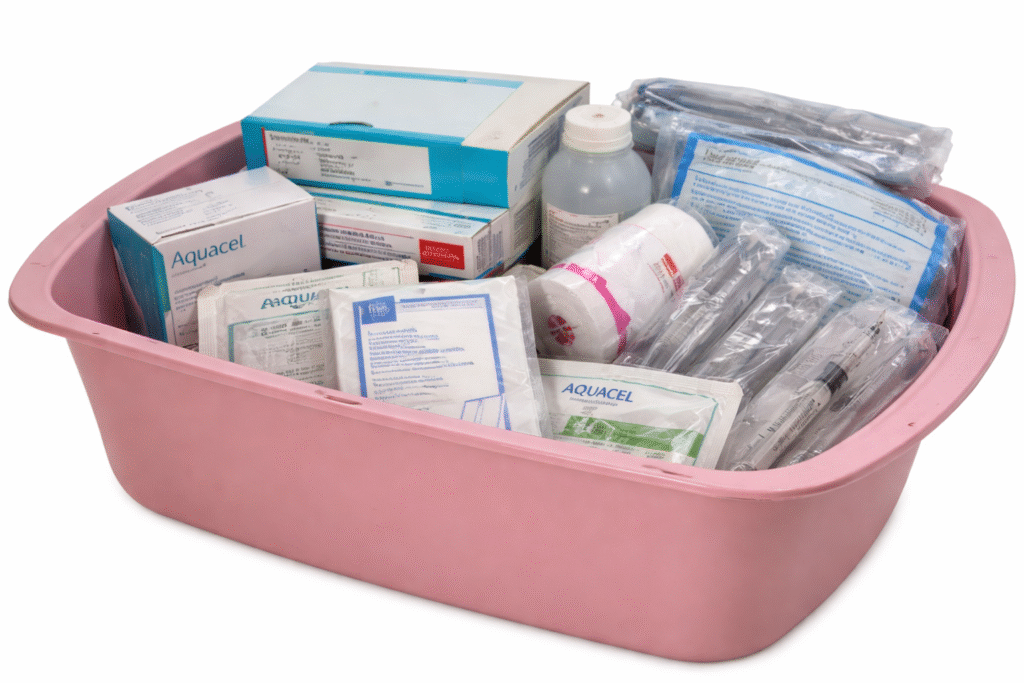
One example she shared was the standard pink basin often used during patient setup. Over time, it had become a convenient place to store extra supplies that might be needed but often weren’t. By the time a patient was discharged, those unused items had to be thrown away. It wasn’t the result of a formal policy, but rather a habit that had developed over time.
By stepping back and rethinking this approach, Ann and her colleagues began shifting from preparing everything to preparing only what was needed. The adjustment was simple, but it reduced both clutter and waste in a noticeable way.
Making Sustainability Fit the Workflow
One of the biggest realities in healthcare is that there is very little extra time. Nurses are managing patient care, documentation, coordination, and constant decision-making, so any sustainability effort has to fit naturally into that environment. If it feels like an additional task, it’s unlikely to gain traction.
Instead, the most effective changes are the ones that integrate into existing workflows. This can mean being more intentional about when supplies are opened, how materials are staged in patient rooms, and how waste is sorted at the point of use. It can also mean speaking up when a process consistently leads to unnecessary waste.
These are not major overhauls, but when applied consistently across a unit or facility, they can significantly improve waste diversion in healthcare and reduce overall material use.
Building Momentum from the Ground Up
For nurses interested in getting more involved, the most practical approach is often to start small and focus on what is immediately visible. Real examples of waste or inefficiencies tend to resonate more than abstract goals, and solutions are more likely to stick when they reflect the realities of a clinical environment.
Changes in healthcare rarely happen all at once. It builds over time, often through peer-to-peer influence rather than top-down directives. A few engaged individuals can create momentum simply by asking questions, sharing observations, and reinforcing better practices in everyday work.
Shifting the Focus Upstream
Much of the conversation around waste management in hospitals focuses on downstream activities like sorting, hauling, and disposal. While those steps are necessary, they address waste after it has already been created.
The greater opportunity lies upstream… at the point where decisions are made and waste is generated in the first place.
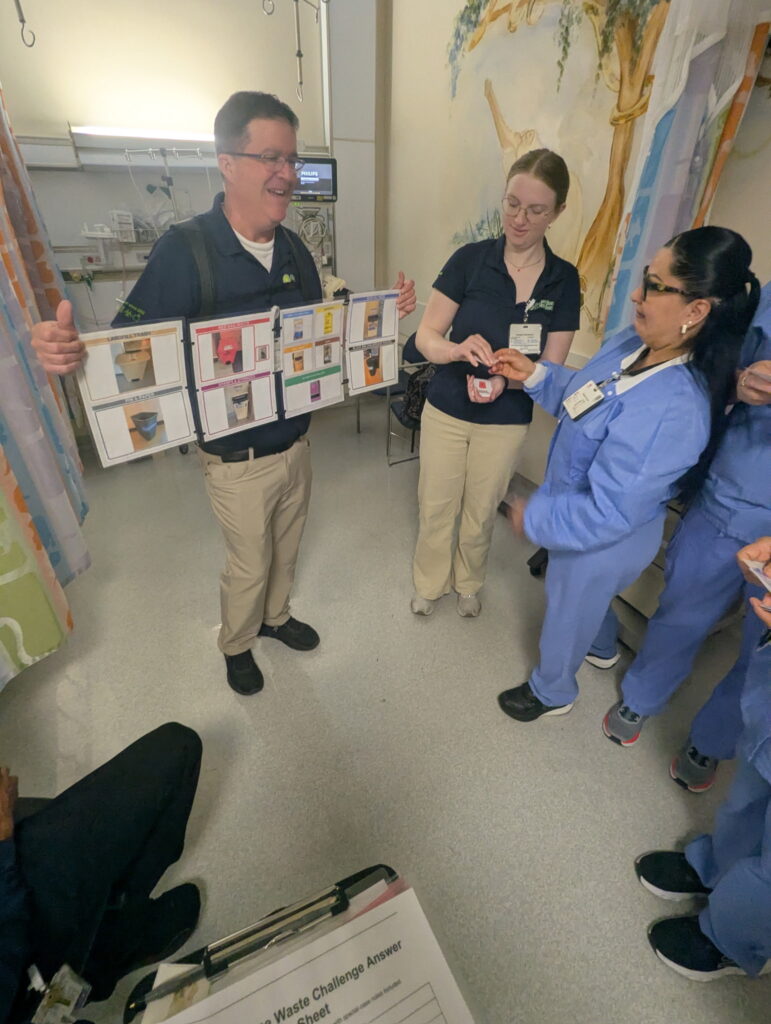
By involving nurses in these efforts, hospitals can reduce unnecessary supply use, improve waste segregation at the source, and create systems that are both more efficient and more practical to follow. This not only supports hospital sustainability goals but also aligns more closely with the core mission of healthcare.
A Practical Path Forward
As environmental impacts become more closely tied to patient outcomes, the role of nurses in sustainability efforts will only continue to grow. They are already positioned at the intersection of care and operations, with a clear understanding of how systems function in real time.
Sustainability in healthcare doesn’t begin with policy alone. It takes shape through awareness, ownership, and small, consistent shifts in daily practice. When nurses are supported and included in that process, healthcare waste reduction becomes more than an initiative – it becomes part of how care is delivered.
Ready to Take the Next Step?
If you’re looking to reduce medical waste, better understand your waste streams, or engage staff in more meaningful ways, we can help. From healthcare waste audits to hands-on staff engagement strategies, we work with hospitals to build systems that are practical, effective, and built to last.

Our team of sustainability and waste consultants work together to develop content for our site. Contact us to learn more about something we’ve written about or would like us to focus on in the future.

Newsletter
Keep up to date with the latest from the Reduction In Motion team.