
5 Costly Waste Mistakes Hospitals Can Make
Managing hospital waste isn’t just about compliance – it’s about protecting your bottom line. Hospitals deal with complex waste streams, fluctuating patient volumes, and strict regulations. When waste isn’t properly tracked or handled, the financial impact can be significant. That’s why hospital waste management cost savings aren’t optional; they’re essential.
Below are five common and costly mistakes hospitals make and how to avoid them.
1. Failing to Track Waste Generation and Costs
Without clear visibility into how much waste your facility produces (and what it costs you), overspending becomes inevitable. Many hospitals can’t audit monthly waste invoices and reports for accuracy because they don’t have a data system in place.
Why it’s costly:
- Misbilling happens on waste invoices and can’t be corrected if you don’t have a data tracking system.
- Without data tracking, high-cost waste streams and inefficient processes can’t be identified.
- Budget planning becomes much more difficult without sound data.
- Opportunities for diversion and reduction go unnoticed when data isn’t tracked.
How to avoid it:
Demand that specific data be provided by waste haulers in each by writing it into your contract. Assign staff or hire a specialist to collect data each month and produce a report that can be used to audit billing for correctness and make plans to improve waste programs.
2. Flat Fee Billing by Waste Haulers
Flat monthly billing arrangements seem convenient, but they often hide the true cost of waste services.
Why it’s costly:
- You may be paying for pickups you don’t need.
- There’s no incentive for haulers to optimize routes or reduce service frequency.
- There’s no incentive for you to reduce waste and increase diversion.
- You lose the ability to match cost to volume and lose pricing transparency.
How to avoid it:
Request itemized billing and weigh-based invoicing where possible. If flat fees are unavoidable, compare them regularly to your actual volume by demanding this data in contracts.
3. Overclassifying All Pharmaceutical Waste as Hazardous
Not all pharmaceutical waste needs to be treated as hazardous – but many hospitals still default to this approach out of convenience for staff and fear of noncompliance.
Why it’s costly:
- Hazardous pharmaceutical waste can cost 5–20x more to dispose of.
- A very small portion (less than 5%) of all pharmaceuticals need to be disposed of as hazardous.
- You pay for unnecessary containers, pickups, and processing.
How to avoid it:
Work with your waste hauler to conduct a pharmaceutical waste characterization and provide a system for separating pharmaceutical waste streams. Most hospitals see immediate cost reductions when hazardous and non-hazardous streams are properly separated. Ensure annual training is in place to maintain compliance.
4. Disposing of Trash in Regulated Medical Waste Bins
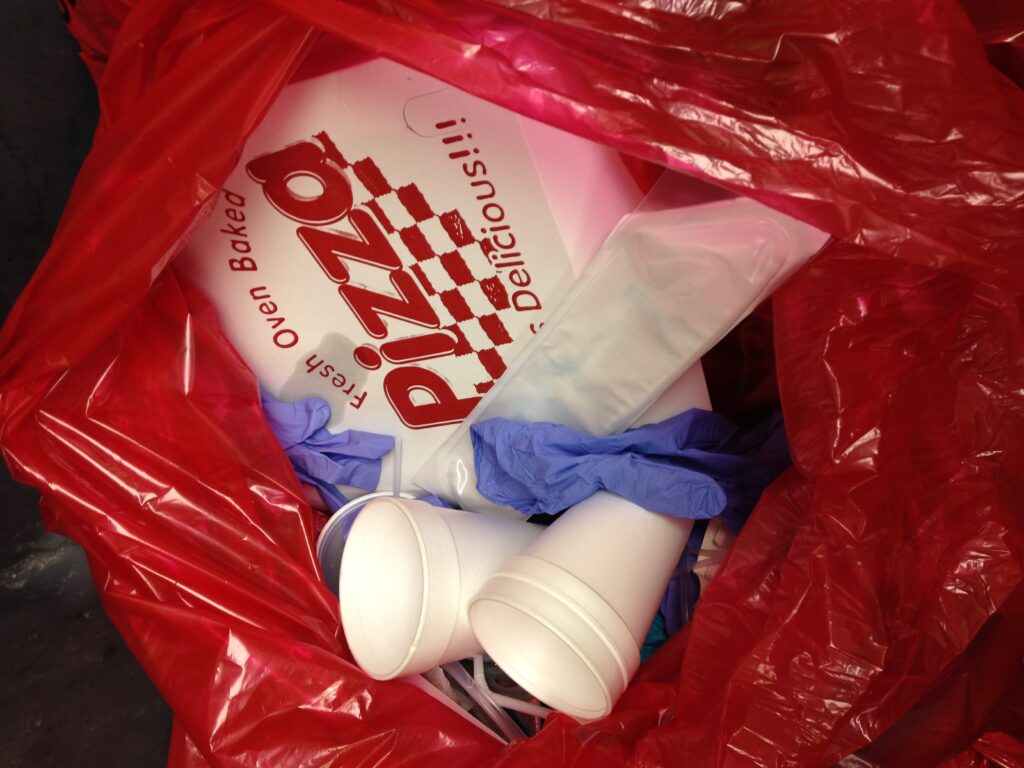
The volume of regulated medical waste, red bag waste, or RMW in a clinical setting is dependent upon the type of procedures being conducted. These bins often become expensive catchalls. When general trash ends up in biohazard bags, the costs skyrocket.
Why it’s costly:
- RMW disposal is significantly more expensive than landfill or recycling.
- Overflowing RMW leads to more pickups and higher disposal and service charges.
How to avoid it:
Provide better staff education, right-size container placement, and conduct periodic audits to reinforce correct disposal habits.
5. Not Monitoring Compactor and Equipment Fullness
Hospitals generate significant volumes of waste at a regular pace. Set schedules that over-service equipment to ensure that waste doesn’t pile up, but leads to excessive costs from hauling partially full loads.
Why it’s costly:
- You pay haulers the full transportation costs for half-empty compactors.
- When compactors are gone too often, waste can be improperly disposed into other equipment.
How to avoid it:
Use fullness sensors, weights, or digital monitoring to optimize pickup frequency. Even small adjustments can create significant annual savings.
Final Thoughts
Each of these mistakes chips away at the operational efficiency of a hospital – but they’re all avoidable. With the right tracking, proper waste classification, and equipment optimization, hospitals can significantly reduce waste costs while improving compliance.
If you’re looking to make waste work for your facility, a customized waste assessment can reveal immediate savings opportunities.

Our team of sustainability and waste consultants work together to develop content for our site. Contact us to learn more about something we’ve written about or would like us to focus on in the future.

Newsletter
Keep up to date with the latest from the Reduction In Motion team.