
Rethinking Plastics: Unique Solutions for Hard to Recycle Plastics
Plastic Free July usually brings a simple message: reduce plastic use wherever you can. But in reality, especially across healthcare, labs, distribution centers, and stadium operations, the conversation is a bit more complicated. Because plastic isn’t always optional.
In many environments, it’s essential – used for infection prevention, sterility, product protection, and safety. The goal isn’t elimination. It’s making sure these materials don’t default to landfill just because they don’t fit in standard recycling streams.
And that’s where we’ve been focusing with clients: identifying the “unavoidable plastics,” isolating them at the source, and building pathways to get them into specialized recycling systems.
So the better question becomes: what plastic is quietly moving through your operation every day?
Healthcare & Sterile Environments: The “Hidden Wrap” Problem
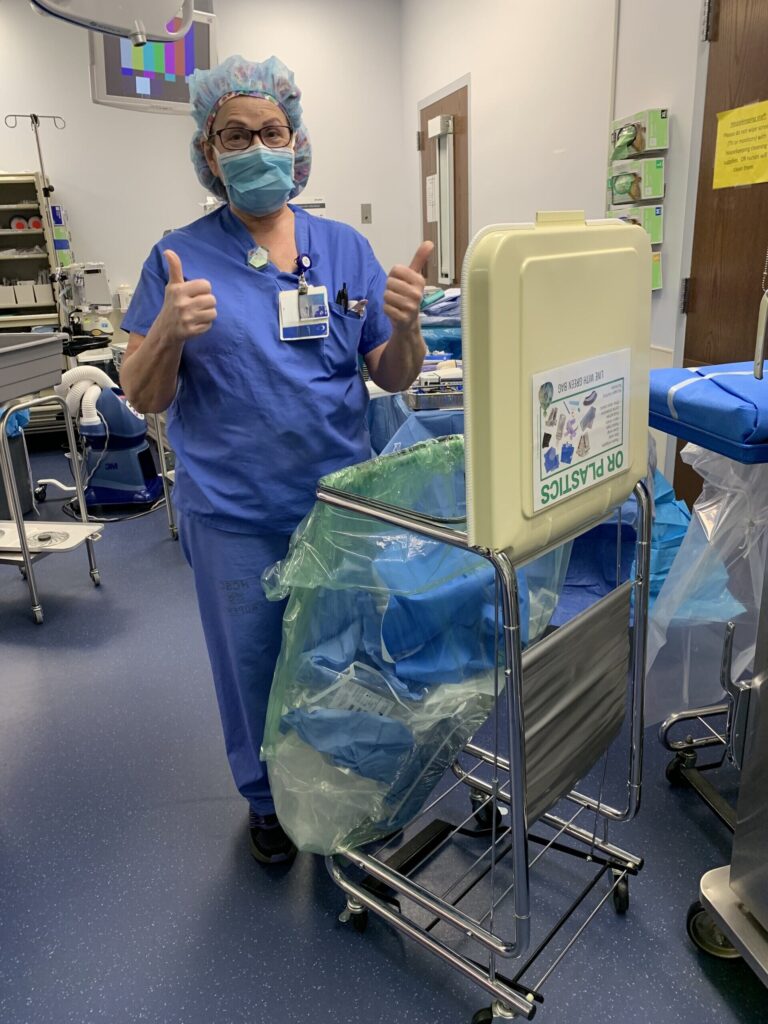
In healthcare settings, for example, plastic is everywhere in sterile workflows. Peel pouches, blue wrap, PPE – materials designed to protect patients and staff, then immediately discarded after use.
When those items are captured directly in procedural areas or operating rooms (before contamination or mixing with other waste) they become a much cleaner, more valuable recycling stream. From there, they can be consolidated and directed into specialized programs instead of disposal.
The key here is starting small. Even a few rooms or departments can prove the concept, and once the system works, it typically scales naturally.
Labs: The Surprisingly Valuable Pipette Holder Stream
Labs tell a similar story, just with a different material.
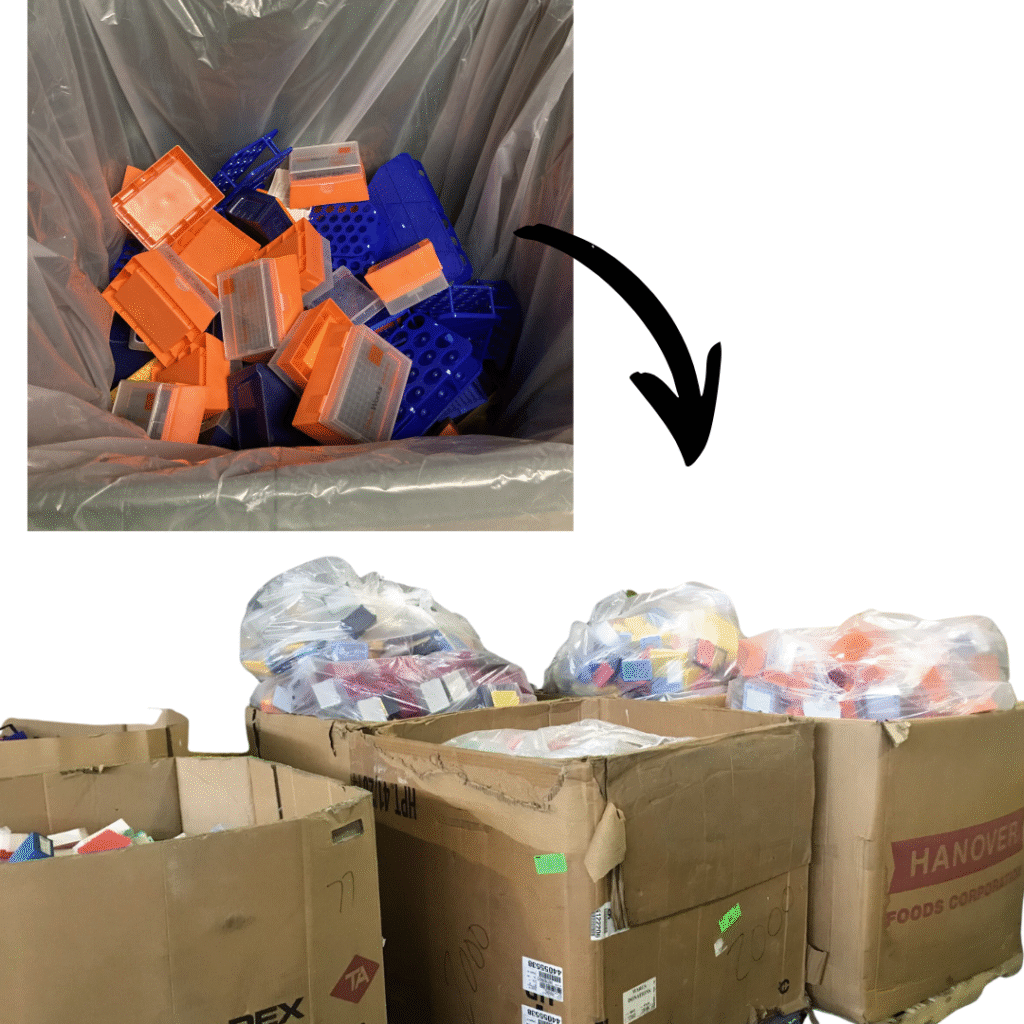
Empty pipette holders are a surprisingly strong example. They’re clean, consistent, and often generated in large volumes across research and medical education environments. We helped one institution set up a collection system for these over a decade ago, and it’s still running today.
The success comes down to placement and clarity – put bins where the material is generated most, and keep the stream tight. One important rule: pipette holders only, no pipettes, to avoid contamination risks.
Simple definitions tend to make programs stick.
Distribution Centers: Shrink Wrap & Soft Plastics Baling
In distribution centers, the challenge shifts to soft plastics—shrink wrap, plastic film, and bags that accumulate quickly around shipping and receiving operations.
Depending on the hauler and local market, these materials can often be baled either separately (shrink wrap alone) or combined with clean plastic bags. The critical factor is cleanliness. No debris, no contamination—just clean, sorted material.
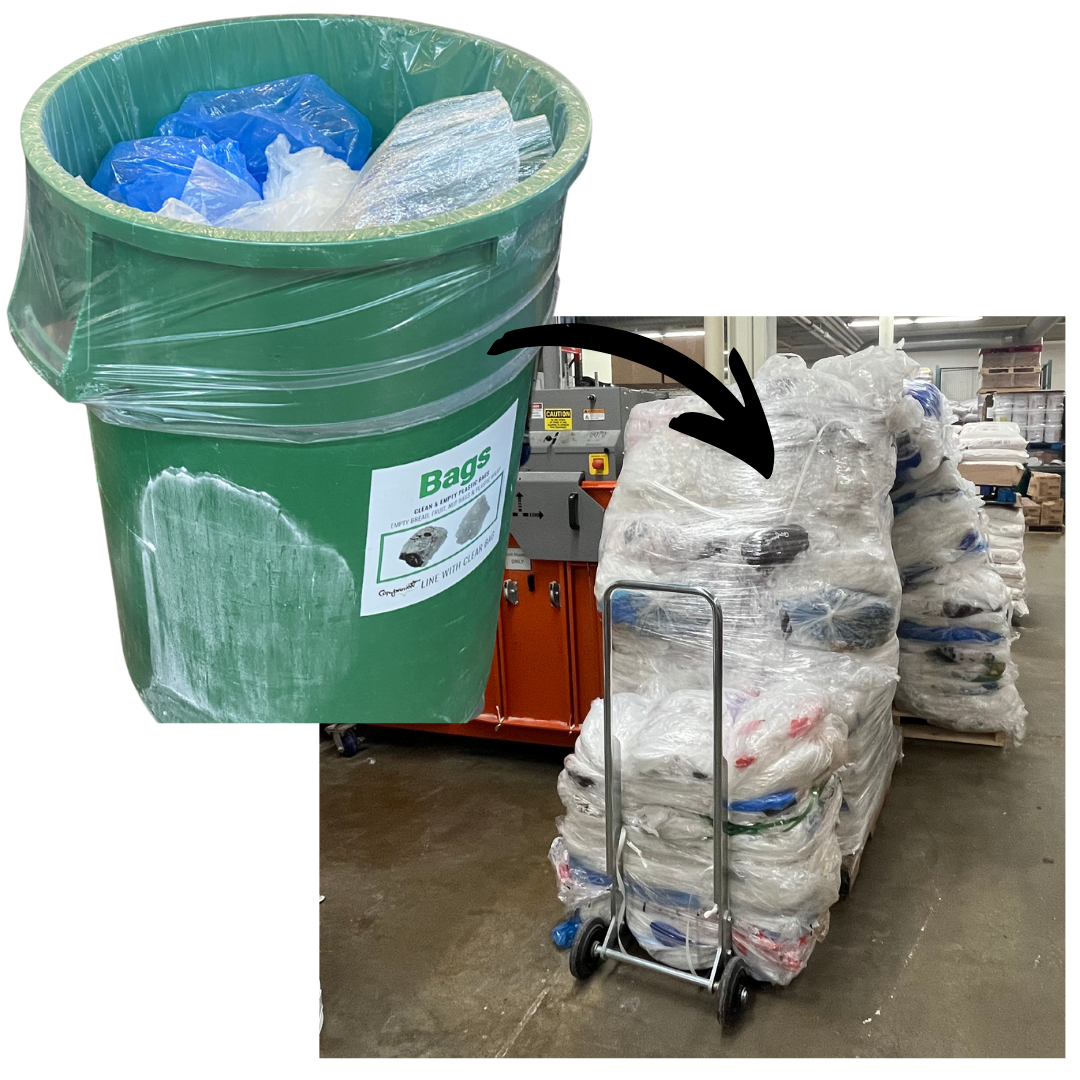
When baled in volume, these streams become far more efficient to transport and, in some cases, can even carry commodity value.
Stadiums: Yes, Even the Seats
And then there are the less obvious examples… like stadium seating.
In one case, a stadium facing seat replacement avoided sending thousands of plastic seats to bulk waste. Instead, the seats were collected, metal components removed to improve recyclability, and the plastic was routed into a recycling stream.
The logistics were also simplified: as new seats were installed, old ones were placed back into the original packaging for recycling. A small process change, but a big impact on keeping material out of landfill.

Even if Plastic Free July’s primary focus is eliminating plastics, we firmly believe there’s still space to identify ways to divert existing plastics that are common in complex systems.
Once you start looking closely, a lot of what gets labeled as “waste” is really just material without a clear system. And when those systems are built, even the most “unavoidable” plastics can be redirected into something useful again.
So the question isn’t whether plastic is present in your operation. It’s whether it’s being managed… or just disappearing into the trash stream by default.
What’s hiding in your operation?
If you’re interested in identifying overlooked plastic streams or improving landfill diversion in your facility, we can help. We work with healthcare systems, labs, campuses, and large-scale operations to assess waste streams, isolate unique materials, and build practical, scalable recycling solutions.
Reach out to schedule an assessment and start uncovering opportunities that are often hiding in plain sight.

Our team of sustainability and waste consultants work together to develop content for our site. Contact us to learn more about something we’ve written about or would like us to focus on in the future.

Newsletter
Keep up to date with the latest from the Reduction In Motion team.